
SEC and CFTC Finally Align on Crypto: “Most Assets Aren’t Securities”
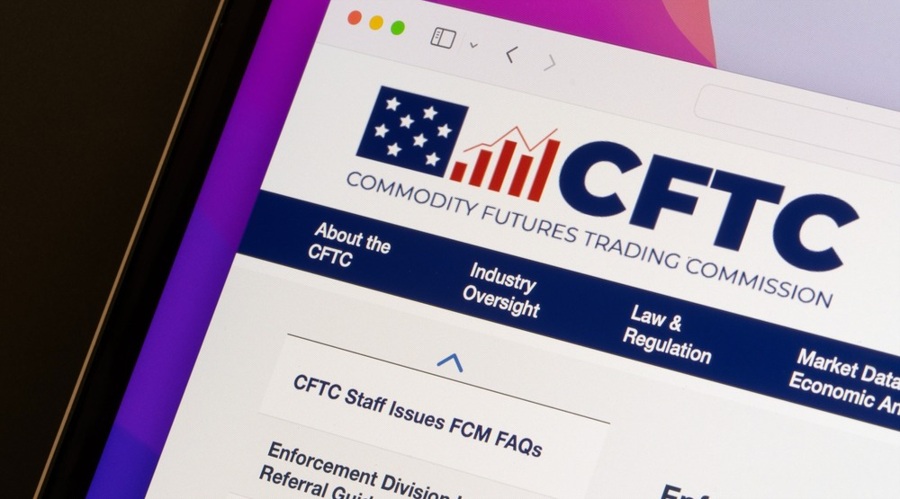
Most crypto assets are not securities, according to new
guidance jointly issued by the U.S. Securities and Exchange Commission (SEC)
and the Commodity Futures Trading Commission (CFTC).
The interpretation, issued by the two regulators in a joint
statement on Tuesday, sets out how federal laws apply to digital assets. It defines
when a token moves from being a security to a commodity and syncs the approaches
of the two regulators to crypto regulation.
The SEC has long considered many crypto tokens, particularly those sold through initial coin offerings (ICOs) or linked to profit expectations, as securities under the Howey Test. It placed them under its oversight.
In contrast, the CFTC has treated major cryptocurrencies such as Bitcoin and Ether as commodities under the Commodity Exchange Act, also bringing them within its jurisdiction.
Coordinated Regulatory Approach
“After more than a decade of uncertainty, this
interpretation will provide market participants with a clear understanding of
how the Commission treats crypto assets under federal securities laws,” commented
SEC Chairman Paul Atkins. “It also acknowledges what the former administration refused
to recognize – that most crypto assets are not themselves securities.”
Before this joint interpretation, the duo applied
crypto laws inconsistently, often relying on case‑by‑case enforcement and court
decisions to determine whether a token was a security or a commodity.
The joint interpretation now creates a clear classification system for different types of digital assets, including commodities, collectibles, utility tokens, stablecoins, and securities.
It explains how a crypto asset that isn’t a security on its own can still fall under securities laws if it becomes part of an investment contract, and how it can later move out of that category.
Join the inaugural Finance Magnates Singapore Summit 2026, which will bring together brokers, fintechs, banks, EMIs, wealth managers, and hedge funds across APAC.
The CFTC confirmed it will apply the Commodity Exchange Act
in line with the SEC’s approach. CFTC Chair Michael Selig said the decision
provides long-awaited clarity for innovators and investors. Atkins called the interpretation a long-overdue step that “draws clear lines in
clear terms.”
The joint release supports ongoing efforts in Congress to
establish a unified market structure for digital assets. The interpretation
will be published on both agencies’ websites and in the Federal Register.
Crypto Tokens Get Clearer US Rulebook
The new joint interpretation now gives crypto firms a
clearer line on whether a token sits in SEC or CFTC territory, reduces the risk
that the same asset is treated differently over time, and lowers the odds of
“regulation-by-enforcement” that has dominated the US market so far.
For an industry that has long operated under the threat that
a token might be deemed a security only after launch, the explicit
acknowledgment that most crypto assets are not themselves securities, and that
investment contracts can end, directly tackles the legal grey zone.
In the US, crypto has been shifting to a more structured
rulebook with clearer roles for the SEC, CFTC and Congress. Lawmakers pushed
market‑structure
and stablecoin bills such as the GENIUS Act.
At the same time, the SEC has opened the door to spot bitcoin and ether ETFs and relaxed some earlier banking constraints,
which has driven institutional adoption via listed products rather than
offshore exchanges.
This article was written by Jared Kirui at www.financemagnates.com.
Credit: Source link