
Poland’s crypto licensing deadlock is handing foreign EU firms an advantage
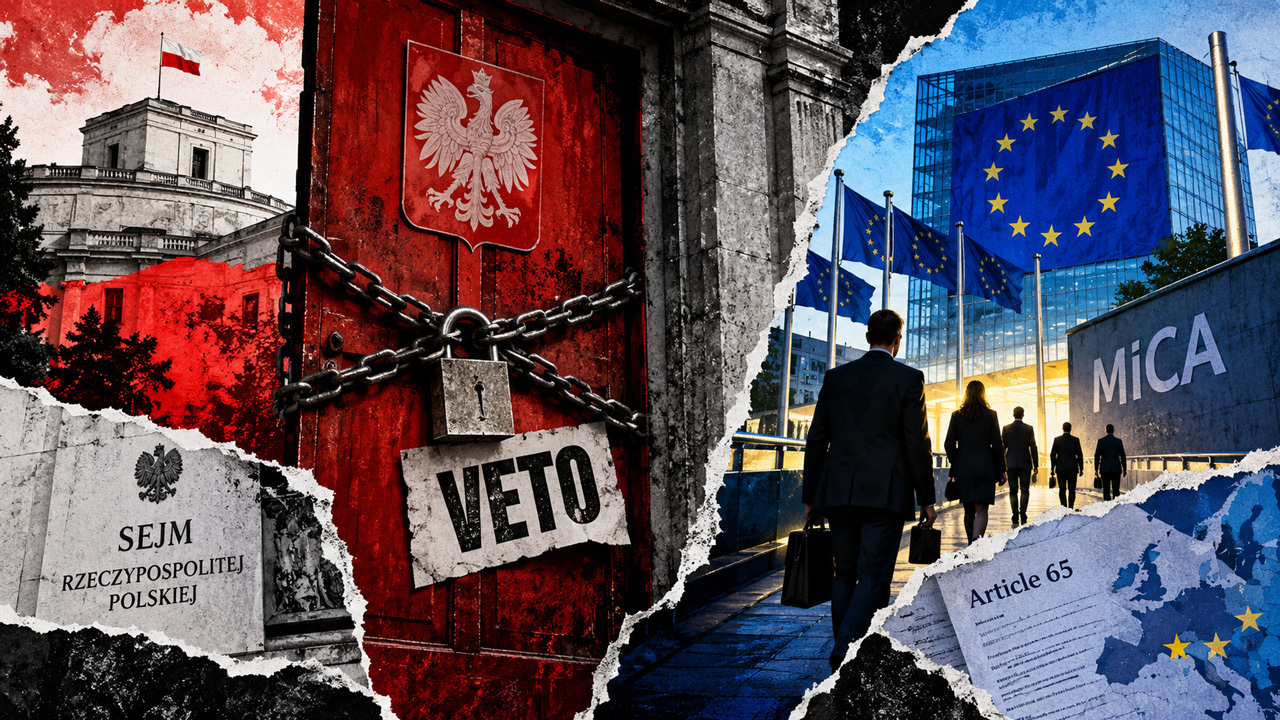
Poland’s failed crypto vote has left domestic firms unable to seek licenses while EU-authorized rivals continue entering the market.
The Sejm failed Sept. 4 to override President Karol Nawrocki’s veto of legislation needed to implement parts of the European Union’s Markets in Crypto-Assets (MiCA) Regulation, prolonging a licensing gap more than two months after Poland’s transition period expired.
Lawmakers recorded 241 votes to re-enact the bill, 198 against and three abstentions, falling short of the threshold required to overcome the June 11 veto.
Without the legislation, Poland has yet to designate the domestic authority needed to process ordinary MiCA applications. The Polish Financial Supervision Authority’s office has said authorization proceedings cannot begin until that designation is made by law.
That leaves firms seeking a Polish license stuck even as competitors authorized elsewhere in the bloc retain a route into the same market.
EU licenses offer a way around Poland’s blockage
MiCA allows an authorized crypto-asset service provider to operate across member states through its home regulator.
A firm can notify that regulator of the countries and services it intends to cover and begin cross-border activity once it has transmitted the information, or after the applicable waiting period. Polish regulators have confirmed that route remains available.
The advantage became more significant after July 1, when the maximum MiCA transition period expired.
Companies can no longer rely on Poland’s previous virtual-currency activity register to continue operating.
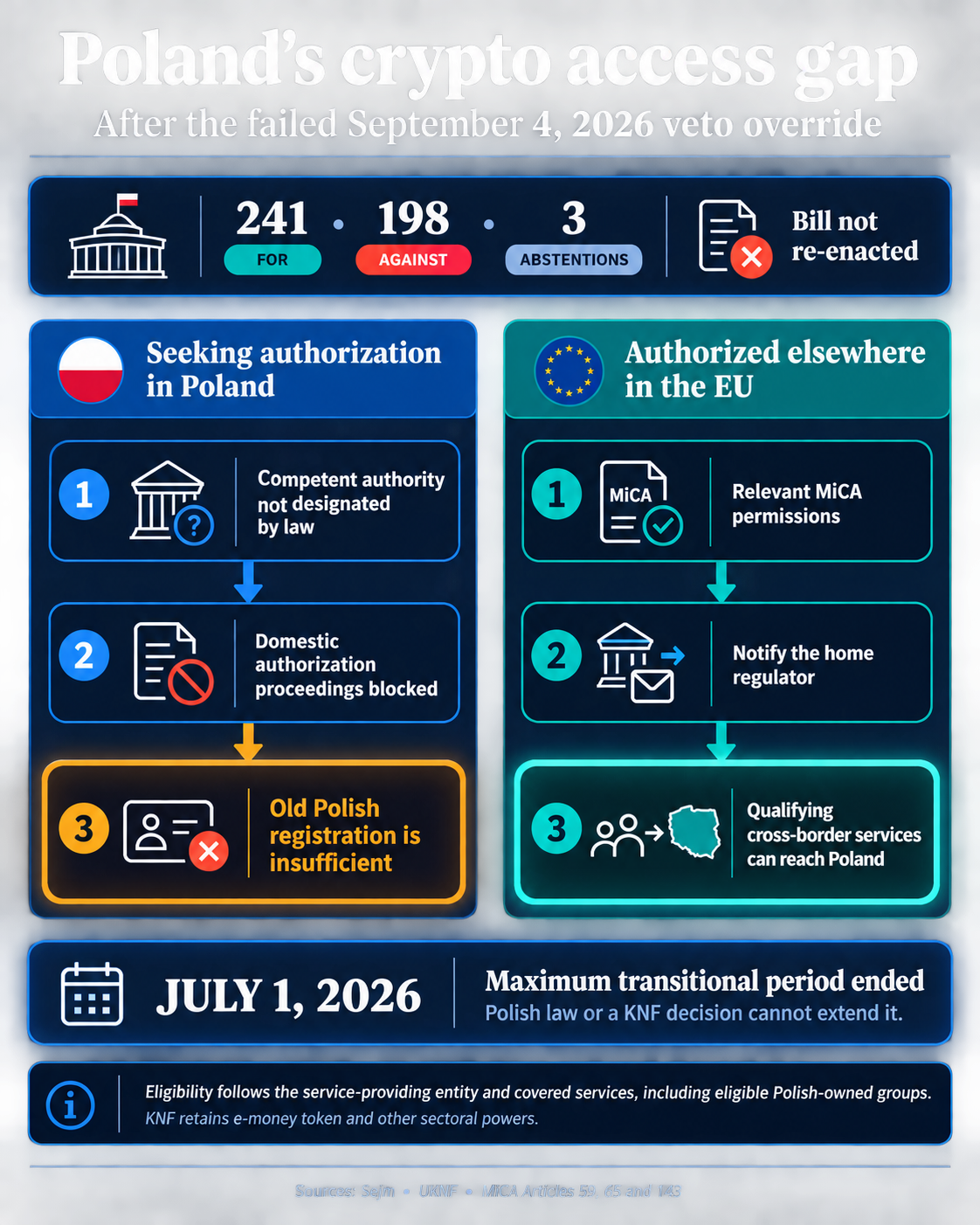
The Katowice Tax Administration Chamber said an entry on that register no longer provides authorization, while Polish regulators maintain that domestic legislation or an administrative decision cannot extend the transition.
That effectively closes the old route before Poland has opened the new one.
The distinction follows the entity providing the service rather than the nationality of its owners. A Polish crypto group could still reach domestic customers through an affiliate that has obtained the necessary MiCA authorization elsewhere in the EU and completed the cross-border notification process.
A company relying only on its old Polish registration cannot.
That creates an incentive for firms unwilling to wait on Warsaw to seek authorization in another member state where the MiCA licensing machinery is already operating.
For applicants that remain in Poland, the next opening depends on lawmakers passing legislation that designates a competent authority. Until then, their quickest route back to Polish customers may run through another European capital.
Credit: Source link